Six webinars lay the groundwork for the first European Course on Volunteer Support for Families
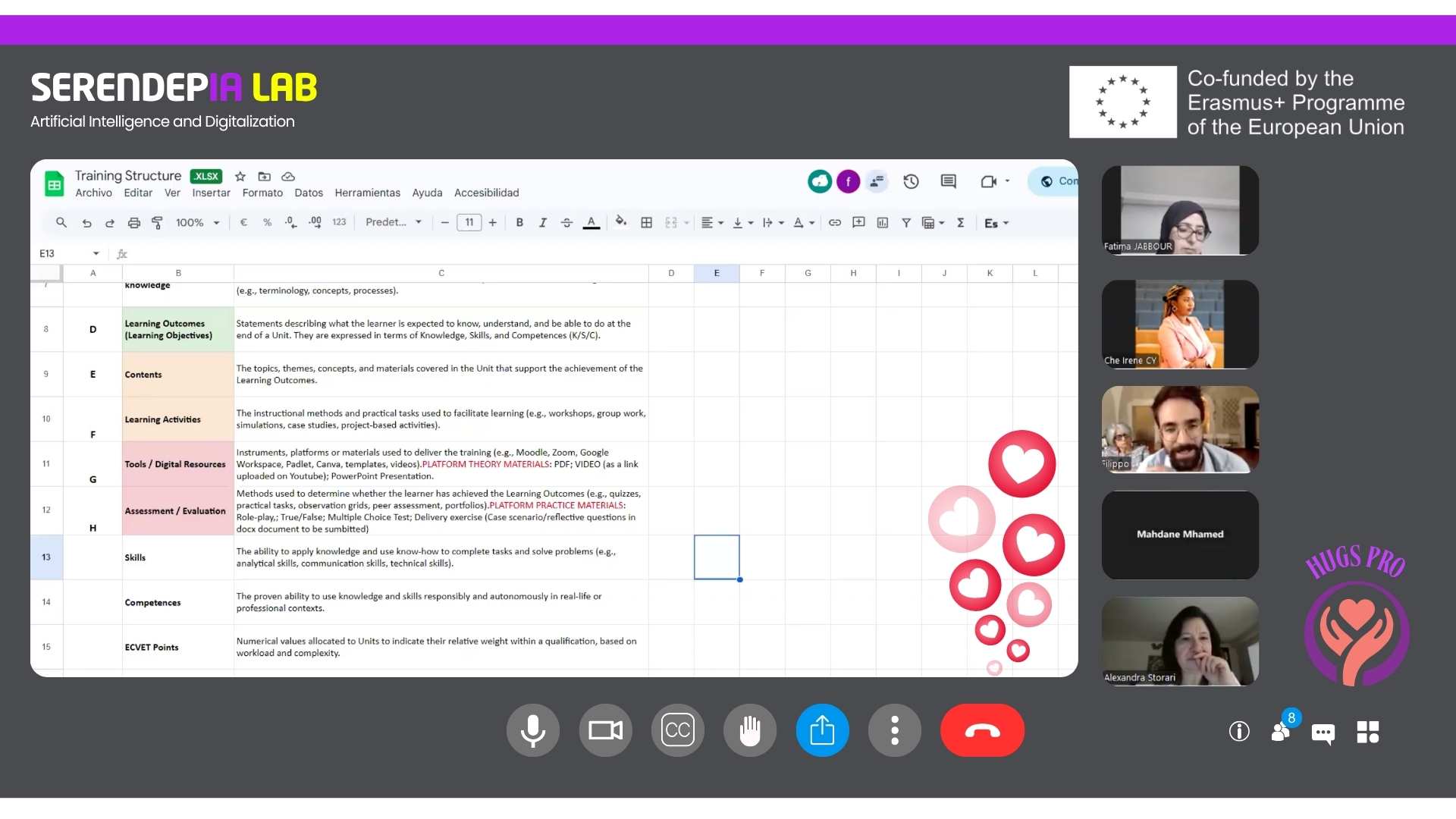
Between April 8 and May 13, 2026, the partners of the international HUGS-PRO project successfully completed a series of six webinars dedicated to structuring the future European Training Course for Volunteer Support Workers. This was a key milestone in the project’s timeline, funded by the Erasmus+ program, which confirmed solid progress toward one of its most ambitious goals: to provide Europe with a common, rigorous, and compassionate training program for those who support families during their most vulnerable moments.
The initiative is coordinated by the Italian organization Famiglie per la Famiglia and brings together organizations from Spain, France, Cyprus, and Morocco in a Euro-Mediterranean alliance that seeks to provide a qualified and comprehensive response to the current challenges of motherhood and family support in the region.
Six sessions, one common goal
Over the course of the six virtual sessions, the technical teams from each country worked side by side on tasks essential to the development of the training program:
- Defining the structure of the training manual, laying the theoretical and methodological foundations of the course.
- Clearly distributing responsibilities among the consortium partners, ensuring an efficient division of labor.
- Development of digital educational resources designed to facilitate hands-on learning for future volunteers.
A particularly noteworthy aspect of the process was the use of a standardized work template, which made it possible to unify evaluation criteria, standardize theoretical content, and establish common quality standards. This coordination effort was key to ensuring that the program maintained the same consistency and level of rigor across all participating countries, in preparation for its future rollout on a national scale.
A step forward that reinforces the project’s direction
Each seminar has reflected the spirit of HUGS-PRO: putting AI and technology at the service of human care, not in its place. For Serendepia Lab, participating in this process has also been a way to reaffirm our role as a technology partner: translating the complexity of AI into accessible tools that are always designed with people in mind.
With the manual now structured, the project is entering its next phase: developing the content and preparing for rollout in each partner country. We remain committed, with the same conviction as always.